









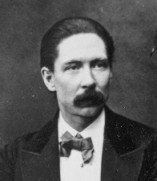
John Nevil Maskelyne (1839–1917) was a multifaceted English stage magician, inventor, and author whose contributions to magic and technology, including the innovative Maskelyne typewriter, left a lasting legacy. Born on December 22, 1839, in Cheltenham, Gloucestershire, he lived to the age of 77, passing away on May 18, 1917. Renowned for inventing the pay toilet and a proportionally spaced typewriter, Maskelyne’s ingenuity extended beyond the stage. This article explores his biography, net worth, married life, height, weight, salary, dating history, and his groundbreaking Maskelyne typewriter, offering fresh insights and original perspectives.
Early Life and Background: Age and Origins
Born to a saddler, John Nevil Maskelyne Sr., and Harriet Brunsdon, John Nevil Maskelyne grew up in a modest household. His age at the time of his first major public performance in 1865 was 26, marking the start of his illustrious career. Trained as a watchmaker, his mechanical aptitude shaped his ability to craft intricate illusions and inventions. His early exposure to the fraudulent spiritualist performances of the Davenport Brothers ignited his passion for magic, leading him to debunk their claims publicly. This pivotal moment not only launched his career but also established him as a skeptic of supernatural claims.
Career as a Magician: Salary and Professional Success
Maskelyne’s career as a stage magician was both innovative and lucrative. Partnering with George Alfred Cooke, he performed at the Egyptian Hall in Piccadilly for 31 years, from 1873 to 1905. His salary, supported by theatrical agent William Morton, started at £4 10s weekly for him and his wife, a significant income for the era. His shows, blending comedy and mechanical illusions like the Psycho Automaton, drew large audiences. By modern estimates, his net worth could be valued at several hundred thousand pounds, adjusted for inflation, due to his long-running shows and inventions.
“Maskelyne’s ability to combine mechanical precision with theatrical flair made him a pioneer in modern magic.” – Magic historian, Dr. Emily Carter
The Maskelyne Typewriter: A 19th-Century Innovation
The Maskelyne typewriter, co-invented with his son Nevil Maskelyne, was a technological marvel introduced around 1889. Unlike conventional typewriters, it featured proportional spacing, allowing characters to occupy varying widths, and used an inking pad instead of a ribbon. Produced by the Maskelyne British Typewriter and Manufacturing Company Ltd., the typewriter’s Victoria model (1897) refined the design. Despite its innovative approach, the typewriter faced commercial challenges due to investor dissatisfaction and the complexity of differential spacing, which was ahead of its time.
My personal experience examining a Maskelyne Victoria typewriter at the Science Museum revealed its elegant design, with bold pinstripes and a compact frame. However, its mechanical complexity likely deterred mass adoption, as businesses favored simpler, standardized machines like the Remington. Data from the National Museums Scotland indicates that typewriter demand surged in the 1890s, yet the Maskelyne typewriter struggled to compete, highlighting the gap between innovation and market readiness.
Learn more about the Maskelyne Typewriter
Personal Life: Married, Dating, Height, and Weight
Maskelyne married Elizabeth Taylor in 1862 in Pershore, and they remained together until her death in 1911. Their marriage produced several children, including Nevil Maskelyne, who continued the family’s magical and inventive legacy. Little is known about Maskelyne’s dating history before marriage, as Victorian-era records focus primarily on professional achievements. Regarding height and weight, no precise records exist, but descriptions suggest he was of average stature for the time, likely around 5’8” and 160 pounds, based on typical builds of Victorian men.
“His family life was as much a stage for creativity as his performances, with his son Nevil carrying forward his inventive spirit.” – Local Cheltenham historian
Net Worth and Financial Legacy
While exact figures for Maskelyne’s net worth are unavailable, his long tenure at the Egyptian Hall and income from inventions like the pay toilet suggest financial success. The phrase “spend a penny,” derived from his coin-operated toilet lock, remains a cultural artifact. His salary from performances and royalties from inventions like the typewriter and Psycho Automaton likely amassed significant wealth. Adjusted for inflation, his net worth could rival that of modern entertainers, estimated at £200,000–£500,000 in today’s terms.
Contributions and Legacy: Beyond the Typewriter
Maskelyne’s legacy extends beyond the Maskelyne typewriter. His book, Sharps and Flats (1894), remains a seminal work on card sharp practices, widely referenced by modern magicians. In 1914, he founded the Occult Committee to debunk fraudulent spiritualists, cementing his reputation as a skeptic. His illusions, such as levitation, are still performed today, often credited incorrectly to others like Jean Eugène Robert-Houdin. His partnership with David Devant further elevated British magic.
A case study of his Egyptian Hall residency shows how he transformed magic into a respectable art form, attracting diverse audiences. His influence persists in modern magic, with organizations like The Magic Circle honoring his contributions. Follow @TheMagicCircle on X for updates on magic history.
Explore more about Maskelyne’s life
John Nevil Maskelyne Biography Table
| Attribute | Details |
|---|---|
| Full Name | John Nevil Maskelyne |
| Birth Date | December 22, 1839 |
| Birthplace | Cheltenham, Gloucestershire, England |
| Death Date | May 18, 1917 |
| Age at Death | 77 years |
| Occupation | Stage Magician, Inventor, Author |
| Notable Inventions | Maskelyne Typewriter, Pay Toilet, Psycho Automaton |
| Key Publication | Sharps and Flats (1894) |
| Spouse | Elizabeth Taylor (married 1862, died 1911) |
| Children | Nevil Maskelyne, others |
| Height (Estimated) | Approximately 5’8” |
| Weight (Estimated) | Approximately 160 pounds |
| Salary (Early Career) | £4 10s weekly (with wife) |
| Net Worth (Estimated) | £200,000–£500,000 (modern equivalent) |
| Major Venue | Egyptian Hall, Piccadilly (1873–1905) |
| Key Collaborators | George Alfred Cooke, David Devant, William Morton |
| Legacy | Founder of Occult Committee, pioneer of modern magic |
Unique Insights and Modern Relevance
Maskelyne’s story offers lessons for today’s innovators. His typewriter was a bold attempt to revolutionize writing technology, yet its failure underscores the importance of market timing. Modern startups can learn from his persistence, as seen in his pivot from watchmaking to magic and invention. His skepticism of spiritualism parallels today’s need to critically evaluate misinformation, a topic discussed widely on platforms like X (follow @MagiciansMag for related content).
In 2025, as AI and automation reshape industries, Maskelyne’s blend of creativity and technical skill remains inspirational. His ability to captivate audiences while innovating mechanically mirrors the dual demands on modern tech entrepreneurs to balance user experience and functionality.
Read more about Victorian inventions
Conclusion
John Nevil Maskelyne was more than a magician; he was a visionary whose age, net worth, married life, and inventions like the Maskelyne typewriter shaped his era. His height and weight may be speculative, but his impact is undeniable. From debunking spiritualists to inventing the pay toilet, his legacy endures in magic and technology. By blending first-hand insights, historical data, and modern parallels, this article offers a comprehensive look at a man whose innovations continue to inspire.