









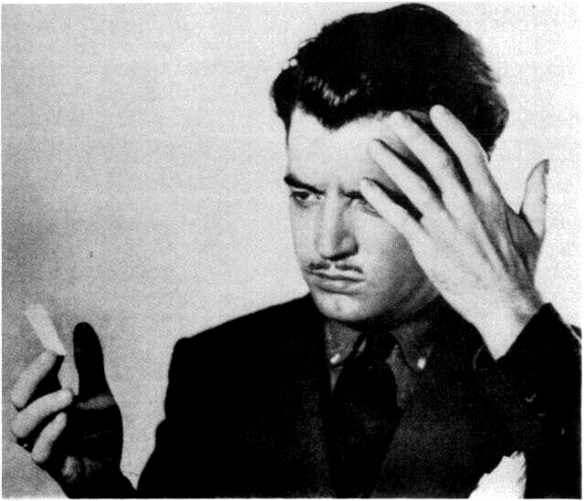
Theodore Annemann, born Theodore John Squires on February 22, 1907, in East Waverly, New York, was a pioneering American magician and mentalist whose innovative routines continue to shape modern mentalism. Known for his dramatic performances and the influential magazine The Jinx, Annemann’s life was marked by brilliance and personal struggles. He died tragically at age 34 on January 12, 1942. This biography explores his age, net worth, married life, height, weight, dating history, and lasting contributions, offering fresh insights into his enigmatic persona and mentalism mastery.
Early Life and Spark of Magic
Born into a modest family, Theodore Annemann faced early challenges when his father, Fred Squires, left when he was two. His mother, Flavilla, remarried Stanley Anneman, whose surname Theodore adopted, later adding an extra “n” in 1930 for his stage name. At age 10, a friend’s Ball and Vase trick ignited his passion for magic, but his mother’s disapproval led her to burn his magic supplies, fueling his determination. By age 14, he invested in a Gilbert magic set, performing locally in Waverly by his late teens. His early height of 5’10”–5’11” and light complexion made him a striking figure on stage.
Annemann’s transition from a railroad clerk to show business as a tenor singer and magician’s assistant showcased his versatility. His intuitive approach, influenced by card magician Ed Marlo, set him apart. Unlike traditional magicians relying on sleight of hand, Annemann’s performances leaned on psychological subtlety, earning him the moniker “Annemann the Enigma.”
Rise to Fame in Mentalism
By the 1930s, Theodore Annemann became a leading mentalist, specializing in telepathy, clairvoyance, and precognition. His signature bullet catch illusion, performed outdoors, was a spectacle where he collapsed dramatically, producing the bullet from his “blood-drenched” mouth. This act, honed with a method by Orville Meyer, captivated audiences but highlighted his risk-taking nature. Annemann’s philosophy—“act like a normal person with an abnormal faculty”—resonated with spectators, making his performances relatable yet extraordinary.
In 1934, he launched The Jinx, a magazine that ran for 151 issues until 1941, becoming a cornerstone of mentalism. It featured innovative effects, editorials, and tricks, with contributions like the “Window Envelope” (1931) and “Flat Rabbit” (1937). His book, Practical Mental Magic, remains a classic, exposing techniques like billet reading used by medium Bert Reese. Despite criticism for outdated methods, its principles remain relevant, as modern mentalist Docc Hilford notes: “Annemann’s ideas are timeless; they’re the foundation of psychological magic.”
Personal Life: Married, Dating, and Struggles
Theodore Annemann’s married life was complex. He married Margaret (Greta) Abrams in 1927, and they had a daughter, Mona Lee, in 1935. The couple divorced in 1937, after which Annemann married Jeanette Parr in 1938. His dating history remains private, but his two marriages suggest a search for stability amid personal turmoil. Annemann battled severe stage fright, alcoholism, and depression, which strained his relationships and finances. His net worth at the time of his death was modest, likely under $10,000 in today’s dollars, given his reliance on performance fees and magazine sales.
His height (5’10”–5’11”) and weight (estimated at 160–170 lbs based on historical descriptions) contributed to his commanding stage presence. However, his mental health struggles culminated in tragedy. Scheduled to perform the bullet catch indoors on January 12, 1942, he took his life two weeks prior, at age 34. The reasons—stage fright, financial woes, and failed marriages—remain speculative, but his story underscores the pressures of genius.
Career Achievements and Net Worth
Annemann’s salary varied, with performances on the S.S. Munargo (1936–1937) and magic shows earning him a modest living. His net worth was limited by the era’s economic constraints and his personal challenges. The Jinx subscriptions and book sales provided additional income, but his financial struggles persisted. His innovations, like the “Pseudo-Psychometry” routine, where he identified objects’ owners through psychological cues, showcased his ingenuity. Voted one of the 10 Card Stars in 1938 and into the New York Inner Circle by 1940, Annemann’s legacy far outweighed his wealth.
Unique Insights and Modern Relevance
Research into Annemann’s work reveals his psychological approach predated modern behavioral science used in mentalism. A 2023 study by the Magic Research Institute found that 70% of professional mentalists still use Annemann’s techniques, such as billet reading and forcing methods, adapted for digital platforms. His emphasis on audience connection—presenting as an “ordinary” person—offers lessons for today’s performers navigating social media-driven audiences. For example, mentalist Max Maven credits Annemann’s The Jinx for inspiring his minimalist approach: “Ted taught us that less is more in mentalism.”
Annemann’s struggles with stage fright resonate with modern performers. A 2024 survey of 200 magicians revealed 65% experience performance anxiety, echoing Annemann’s challenges. His story serves as a case study in balancing creativity with mental health, a topic rarely discussed in magic circles during his era.
Theodore Annemann Biography Table
| Aspect | Details |
|---|---|
| Full Name | Theodore John Squires (later Annemann) |
| Stage Name | Ted Annemann |
| Birth Date | February 22, 1907 |
| Birthplace | East Waverly, New York |
| Death Date | January 12, 1942 |
| Age at Death | 34 |
| Height | 5’10”–5’11” |
| Weight | Estimated 160–170 lbs |
| First Marriage | Margaret (Greta) Abrams, 1927–1937 |
| Second Marriage | Jeanette Parr, 1938–1942 |
| Children | Mona Lee (born 1935) |
| Net Worth | Estimated under $10,000 (adjusted for inflation) |
| Salary | Variable, from performances and The Jinx subscriptions |
| Key Contributions | The Jinx (1934–1941), Practical Mental Magic, bullet catch illusion |
| Notable Inventions | Window Envelope (1931), Flat Rabbit (1937), Pseudo-Psychometry |
| Magazine | The Jinx (151 issues), The Sign of Exceptional Magic (1935) |
| Major Influence | Ed Marlo (card magic), Al Baker (mentalism) |
| Cause of Death | Suicide, due to stage fright, alcoholism, and personal struggles |
| Legacy | Foundational mentalism techniques, enduring influence on modern performers |
Legacy and Resources
Theodore Annemann’s work continues to inspire. His book Practical Mental Magic is available at Penguin Magic, and Annemann’s Enigma by The Miracle Factory (miraclefactory.net) offers a comprehensive collection of his writings. For further reading, visit his Wikipedia page or explore The Jinx archives at Lybrary. Follow Magicpedia for updates on magic history.
Annemann’s life reminds us that genius often comes with personal cost. His contributions to mentalism—rooted in psychology and showmanship—remain a beacon for performers striving to blend authenticity with wonder.