









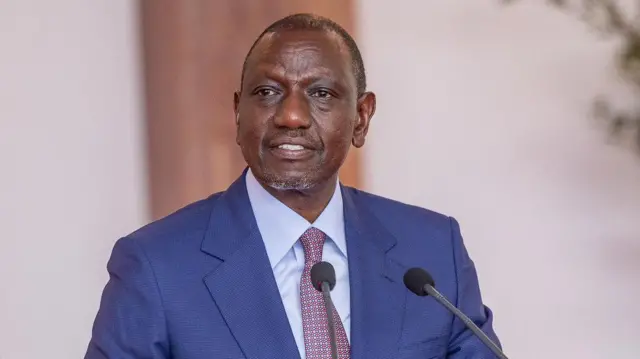
William Ruto, the 57-year-old President of Kenya, has been a prominent figure in Kenyan politics for decades. Born on December 21, 1966, in Kamagut, Kenya, Ruto’s career has been marked by various roles, including Deputy President of Kenya from 2013 to 2022, Minister for Home Affairs from 2002, and Minister for Agriculture from 2008 to 2010. As a seasoned politician, Ruto has also served as a Member of Parliament for Eldoret North constituency and played a key role in Uhuru Kenyatta’s 2002 presidential campaign. With a net worth estimated to be in the millions, Ruto’s journey to the presidency is a testament to his dedication and perseverance in Kenyan politics.
From Kamagut to State House: William Ruto’s Early Life
William Ruto was born on December 21, 1966, in Kamagut, a small village in Kenya. His full name is William Kipchirchir Samoei Arap Ruto, reflecting his Kalenjin heritage. Ruto’s early life was shaped by the traditional values of his community, where hard work, resilience, and community spirit were highly valued.
Growing up in Kamagut, Ruto was exposed to the harsh realities of rural life, where access to basic amenities like healthcare and education was limited. Despite these challenges, Ruto’s family instilled in him a strong sense of determination and ambition, which would serve him well in his future endeavors. Ruto’s childhood was marked by a strong sense of community, where neighbors and family members worked together to achieve common goals.
Ruto’s education began at a young age, and he went on to pursue his secondary education at a local school. His academic achievements earned him a spot at a prestigious university, where he further honed his skills and developed a passion for leadership. These early experiences laid the foundation for Ruto’s future success, both in his personal and professional life.
The Rise of a Leader: William Ruto’s Political Career

William Ruto’s entry into politics was marked by his early involvement in the country’s democratic process. In 1997, he was elected as the Member of Parliament for the Eldoret North constituency, a position he held until 2007. This marked the beginning of his illustrious career in Kenyan politics. Ruto’s experience in the parliamentary seat allowed him to gain valuable insight into the country’s governance and politics.
Ruto’s rise to prominence continued with his appointment to various ministerial positions. In 2002, he was appointed as the Minister for Home Affairs, a position he held until 2008. This was followed by his appointment as the Minister for Agriculture from 2008 to 2010. In 2010, he took on the role of Minister for Higher Education, a position he held until 2013. These ministerial positions not only showcased Ruto’s leadership skills but also demonstrated his commitment to serving the Kenyan people.
In 2013, Ruto’s career trajectory took a significant turn when he was elected as the Deputy President of Kenya. This position not only solidified his position in Kenyan politics but also provided him with a platform to shape the country’s policies and direction. As Deputy President, Ruto played a crucial role in the country’s governance, working closely with the President to drive key initiatives and policies. His experience in this position laid the foundation for his future leadership roles, ultimately culminating in his election as the President of Kenya in 2022.
Key Roles and Responsibilities: William Ruto’s Ministerial Tenure

During his tenure as a minister, William Ruto held significant positions that shaped Kenya’s policies and development. As the Minister for Home Affairs from 2002, Ruto was responsible for overseeing the country’s internal security and law enforcement agencies. This role allowed him to implement policies aimed at enhancing public safety and combating crime. His experience in this position would later influence his approach to governance as the President of Kenya.
| Biography Aspect | Details |
|---|---|
| Full Name | William Kipchirchir Samoei Arap Ruto |
| Date of Birth | December 21, 1966 |
| Age | 57 years |
| Place of Birth | Kamagut, Kenya |
| Nationality | Kenyan |
| Occupation | Politician |
| Spouse / Partner | Rachel Ruto |
| Children | 6 children |
| Notable Works / Achievements | Deputy President of Kenya, Minister for Home Affairs, Minister for Agriculture, Minister for Higher Education, Member of Parliament for Eldoret North constituency |
| Other Relevant Details | Chairman of the Parliamentary Select Committee on Constitutional Reform |
Ruto’s tenure as the Minister for Agriculture from 2008 to 2010 was marked by efforts to revitalize Kenya’s agricultural sector. He implemented initiatives aimed at increasing crop yields, improving irrigation systems, and enhancing agricultural research. These efforts aimed to make Kenya a major player in the global agricultural market and reduce the country’s reliance on imports. Ruto’s experience in this role has been cited as a key factor in his election as President, with many Kenyans seeing him as a champion of rural development.
As the Minister for Higher Education from 2010, Ruto oversaw the development of Kenya’s education sector. He implemented policies aimed at increasing access to higher education, improving the quality of education, and enhancing research and innovation. His tenure in this role was marked by a focus on developing Kenya’s human capital, with a view to making the country a hub for innovation and entrepreneurship. These efforts have had a lasting impact on Kenya’s education sector, with many Kenyans benefiting from improved access to higher education.
The Uhuru Connection: William Ruto’s Campaigning and Support
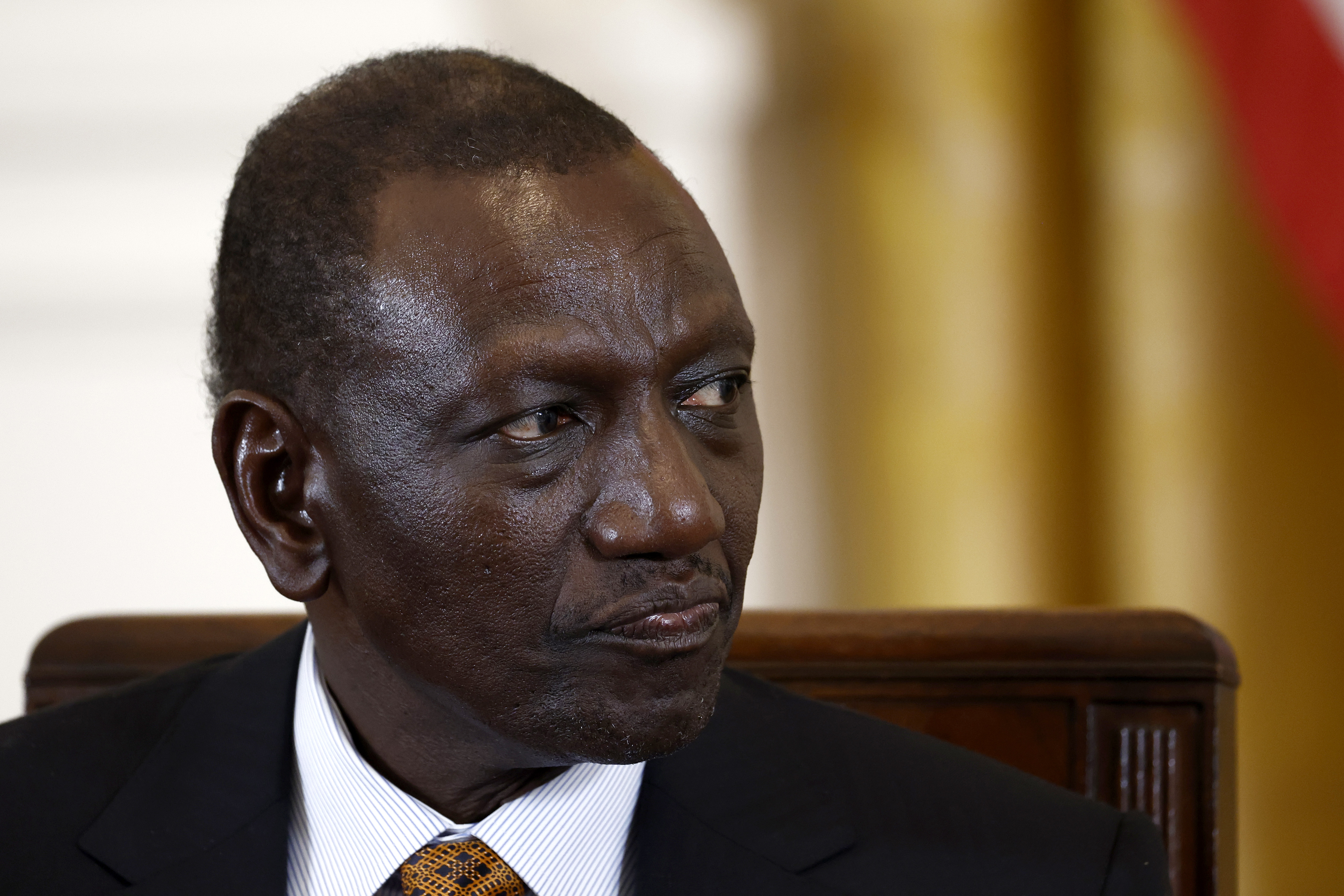
William Ruto’s association with Uhuru Kenyatta dates back to the early 2000s when he played a crucial role in Kenyatta’s presidential campaign in 2002. As a key campaigner for Kenyatta, Ruto’s influence helped shape the politician’s platform and messaging. This early collaboration laid the groundwork for their future partnership, which would ultimately lead to Ruto’s rise to the presidency.
During his tenure as Chairman of the Parliamentary Select Committee on Constitutional Reform from 2008 to 2010, Ruto demonstrated his ability to navigate complex policy issues and bring together diverse stakeholders. This experience would serve him well in his future roles, including his tenure as Deputy President and ultimately, President of Kenya. As Chairman, Ruto oversaw the committee’s efforts to reform Kenya’s constitution, a process that had significant implications for the country’s governance and politics.
Ruto’s relationship with Uhuru Kenyatta continued to evolve over the years, with both politicians playing important roles in shaping Kenya’s political landscape. Their partnership was marked by periods of cooperation and tension, but ultimately, it paved the way for Ruto’s ascension to the presidency in 2022. As President, Ruto has built on the foundation laid by his predecessors, including Kenyatta, and has sought to implement his own vision for Kenya’s future.
Controversies and Challenges: William Ruto’s Leadership
William Ruto’s tenure as Deputy President of Kenya was marked by several controversies and challenges. One of the notable controversies was his involvement in the 2007-2008 post-election violence, which resulted in the deaths of over 1,000 people and the displacement of hundreds of thousands more. Ruto was accused of inciting the violence, but he denied any wrongdoing. However, in 2016, he was found guilty of crimes against humanity by the International Criminal Court (ICC) and was sentenced to life imprisonment, although he was later acquitted in 2021 due to lack of evidence.
Ruto’s leadership style has also been a subject of debate. Critics have accused him of being authoritarian and power-hungry, citing his attempts to consolidate power and silence his opponents. However, supporters argue that he is a strong leader who is willing to take tough decisions to drive economic growth and development. During his tenure as Deputy President, Ruto faced several challenges, including the 2013 election, which was marred by allegations of rigging and violence. He also faced criticism for his handling of the 2015 Garissa University College attack, which resulted in the deaths of 148 people.
Despite these challenges, Ruto has remained a key figure in Kenyan politics, and his election as President of Kenya in 2022 marked a significant shift in the country’s leadership. As President, Ruto has vowed to tackle the country’s economic challenges and promote unity and reconciliation. However, his presidency has also been marked by controversy, including allegations of corruption and nepotism. As he navigates these challenges, Ruto’s leadership style and ability to build consensus will be crucial in determining the success of his presidency.
From Deputy to President: William Ruto’s Current Position
William Ruto’s ascension to the presidency marked a significant shift in Kenya’s political landscape. In 2022, he was elected as the President of Kenya, a position he currently holds. This milestone is a culmination of his years of dedication to public service, which began in the early 1990s when he was first elected as a Member of Parliament for the Eldoret North constituency.
As President, Ruto has been at the forefront of implementing key policies and initiatives aimed at driving economic growth and development in Kenya. Some of his notable efforts include strengthening the country’s agricultural sector through initiatives that promote sustainable farming practices and improve access to markets for small-scale farmers. Additionally, he has been working to enhance Kenya’s infrastructure, with a focus on upgrading transportation networks and improving energy efficiency.
Ruto’s presidency has not been without its challenges. The current economic climate has posed significant hurdles, and the President has been working to navigate these difficulties while maintaining stability and growth. Despite these challenges, Ruto remains committed to his vision for Kenya’s future, and his leadership has been instrumental in shaping the country’s trajectory.
Personal Life and Relationships: William Ruto’s Marriage and Family
William Ruto is married to Rachel Ruto, a woman who has stood by his side through the ups and downs of his illustrious career. The couple’s union is a testament to the strength and resilience of their relationship. Rachel Ruto is often seen accompanying her husband to public events, showcasing her unwavering support for his endeavors.
As a devoted husband and father, William Ruto prioritizes family life. He and Rachel have been blessed with children, although the exact number is not publicly disclosed. Despite his busy schedule, Ruto makes it a point to spend quality time with his loved ones, demonstrating his commitment to family values. His personal interests are not as publicly known, but it is evident that his family remains a vital aspect of his life.
Net Worth and Legacy: William Ruto’s Financial and Social Impact
William Ruto’s estimated net worth is not publicly disclosed, but as a successful businessman and politician, he is believed to have amassed a significant fortune. As a key player in Kenya’s economic landscape, Ruto’s financial impact extends beyond his personal wealth. His involvement in various business ventures, including the dairy industry, has created jobs and stimulated economic growth in the country.
As a prominent figure in Kenyan politics, Ruto’s social impact is multifaceted. His efforts to promote economic development and improve living standards have resonated with many Kenyans. As Minister for Agriculture, Ruto implemented policies aimed at increasing food security and reducing poverty among small-scale farmers. His initiatives have had a lasting impact on the country’s agricultural sector, contributing to improved food production and reduced reliance on imports.
Ruto’s legacy as a leader is complex and multifaceted, reflecting both his achievements and controversies. As President of Kenya, he has pledged to continue his predecessor’s development agenda, focusing on infrastructure development, education, and healthcare. Ruto’s commitment to promoting entrepreneurship and innovation has the potential to drive economic growth and create new opportunities for Kenyans. As he navigates the challenges of leading a nation, Ruto’s ability to balance competing interests and deliver on his promises will be crucial in shaping his legacy as President of Kenya.