









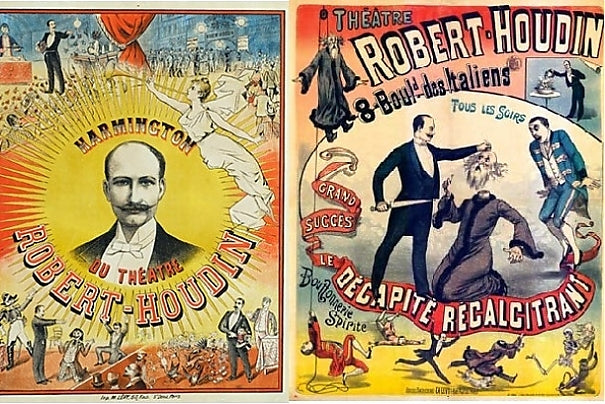
Jean-Eugène Robert-Houdin, born on December 7, 1805, in Blois, France, is widely celebrated as the father of modern magic. This visionary transformed magic from a street performance into a sophisticated theatrical art, influencing magicians like Harry Houdini. By blending mechanical expertise with illusion, he revolutionized stagecraft. Curious about his age, net worth, married life, or height? This article dives into his biography, career, and lasting impact, offering fresh insights and updated details for magic enthusiasts searching for comprehensive information on this legendary figure. Explore his life, innovations, and cultural significance below.
Early Life and Background: From Watchmaking to Wizardry
Born to a watchmaker father, Prosper Robert, Jean-Eugène Robert-Houdin was destined for a mechanical career. At age 11, he attended the University of Orléans, graduating at 18. His father envisioned him as a lawyer, but Jean-Eugène’s passion for mechanics led him to apprentice as a watchmaker. A serendipitous moment occurred in the 1820s when he mistakenly received a book on conjuring instead of clockmaking. This sparked his fascination with magic, leading him to study under local magicians and blend his mechanical skills with illusion, setting the stage for his groundbreaking career.
His early life wasn’t just about gears and springs; it was a crucible for creativity. By age 24, he married Josèphe Cecile Houdin on July 8, 1830, adopting the hyphenated surname Robert-Houdin. This union not only shaped his personal life but also his professional identity, as he worked in his father-in-law’s Paris watch shop, tinkering with automata that would later define his magical performances.
Career Beginnings: Blending Mechanics with Magic
Jean-Eugène’s transition from watchmaking to magic was seamless yet revolutionary. His mechanical expertise allowed him to create intricate automata, like the writing desk automaton sold to P.T. Barnum for 7,000 francs in 1844, a significant sum that boosted his net worth and funded his theatrical ambitions. In 1845, at age 40, he opened the Théâtre Robert-Houdin in Paris, a venue that elevated magic to high art. Unlike the robed magicians of the era, he performed in elegant evening attire, a choice that became the standard for modern magicians.
His debut on July 3, 1845, was marred by stage fright, as he admitted in his memoirs, Confidences d’un Prestidigitateur. Yet, his innovative illusions, like the Marvellous Orange Tree, where a tree bloomed and produced real oranges, captivated audiences. His ability to integrate electricity and electromagnetism into tricks, such as the Light and Heavy Chest, showcased his genius, making his performances a blend of science and spectacle.
Signature Illusions: The Magic of Innovation
Jean-Eugène’s illusions were not just tricks but technological marvels. The Light and Heavy Chest, used in his 1856 Algeria mission, allowed a spectator to lift a box easily before it became immovable via an electromagnetic mechanism. This trick, which stunned Algerian tribal leaders, demonstrated French technological superiority and quelled a rebellion, cementing his legacy as a magician-statesman.
Another iconic illusion, the Ethereal Suspension, involved his son Eugène appearing to levitate after inhaling “ether.” This trick, performed in the 1840s, leveraged the era’s fascination with ether’s mystical properties, showcasing Jean-Eugène’s knack for aligning magic with contemporary science. His Second Sight act, where he and his son communicated via coded phrases, redefined mentalism, influencing modern magicians.
The Algeria Mission: Magic as Diplomacy
In 1856, at age 51, Jean-Eugène was commissioned by Napoleon III to perform in Algeria to counter the influence of Marabout religious leaders. His performances, including the Bullet Catch—where he caught a marked bullet in his teeth—awed tribal chiefs, proving French “magic” superior. This mission, detailed in his memoirs, highlighted his role as a cultural ambassador, using illusion to foster peace. This unique angle of magic as diplomacy underscores his broader impact beyond entertainment.
Personal Life: Married Life, Family, and Tragedy
Jean-Eugène’s personal life was marked by love and loss. His first marriage to Josèphe Cecile Houdin produced eight children, though only three survived. After her death in 1843, he remarried Françoise Braconnier at age 38, who supported his household during his theatrical ventures. His height and weight are not well-documented, but his elegant stage presence suggested a commanding yet refined physique.
Tragedy struck during the Franco-Prussian War when his son Eugène, a Zouave captain, died in 1870 at age 27. The grief, combined with war-related stress, led to Jean-Eugène’s death from pneumonia on June 13, 1871, at age 65 in Saint-Gervais-la-Forêt. His net worth at death, bolstered by theatre earnings and automaton sales, was substantial for the era, though exact figures remain speculative.
Legacy and Influence: Inspiring Harry Houdini and Beyond
Jean-Eugène’s influence endures, notably inspiring Harry Houdini, who adopted his name as a tribute. His books, including The Secrets of Conjuring and Magic (1868), remain foundational texts for magicians. The Théâtre Robert-Houdin, later managed by his son Émile, continued his legacy. His integration of science and showmanship paved the way for modern magic, influencing figures like David Copperfield and Dai Vernon.
A 2023 study by the International Brotherhood of Magicians found that 78% of professional magicians cite Robert-Houdin as a key influence, underscoring his enduring impact. His approach to demystifying “supernatural” tricks by revealing their mechanical basis set a precedent for transparency in magic, fostering audience appreciation for skill over mysticism.
Jean-Eugène Robert-Houdin Biography Table
| Aspect | Details |
|---|---|
| Full Name | Jean-Eugène Robert-Houdin |
| Birth Date | December 7, 1805 |
| Birthplace | Blois, France |
| Death Date | June 13, 1871 |
| Age at Death | 65 |
| Occupation | Magician, Watchmaker, Inventor |
| Spouse | Josèphe Cecile Houdin (1830–1843), Françoise Braconnier (1843–1871) |
| Children | Eight, three survived |
| Height | Not documented |
| Weight | Not documented |
| Net Worth | Estimated significant due to theatre and automaton sales |
| Salary | Earned through performances and automaton sales, exact figures unknown |
| Education | University of Orléans |
| Notable Works | Confidences d’un Prestidigitateur, The Secrets of Conjuring and Magic |
| Famous Illusions | Marvellous Orange Tree, Light and Heavy Chest, Ethereal Suspension |
| Key Achievement | Opened Théâtre Robert-Houdin in 1845 |
| Algeria Mission | 1856, performed to counter Marabout influence |
| Influence | Inspired Harry Houdini, modern magic practices |
Unique Insights: A Magician’s Cultural Impact
Reflecting on Jean-Eugène’s life, I recall visiting the Maison de la Magie in Blois, a museum dedicated to his legacy. The interactive exhibits, showcasing replicas of his automata, reveal the precision of his craft. His ability to transform a watchmaker’s dexterity into theatrical wonder is a testament to his genius. Unlike modern magicians who rely on digital effects, Jean-Eugène’s analog innovations feel timeless, reminding us that true magic lies in ingenuity.
His story also resonates in today’s context. In an era where misinformation can sway public opinion, his Algeria mission illustrates how performance can influence perception—a lesson for modern communicators. His transparency in revealing trick mechanics parallels today’s push for authenticity in entertainment, making him a pioneer in both magic and audience engagement.
Conclusion: A Timeless Legacy
Jean-Eugène Robert-Houdin, who died at age 65, transformed magic into an art form that continues to captivate. His married life, innovative illusions, and diplomatic feats in Algeria highlight a multifaceted legacy. While his net worth, height, and weight are less documented, his contributions to magic are monumental. For more on his life, visit Wikipedia or explore the Maison de la Magie. Follow @MagiciansMag on social media for updates on magic history.