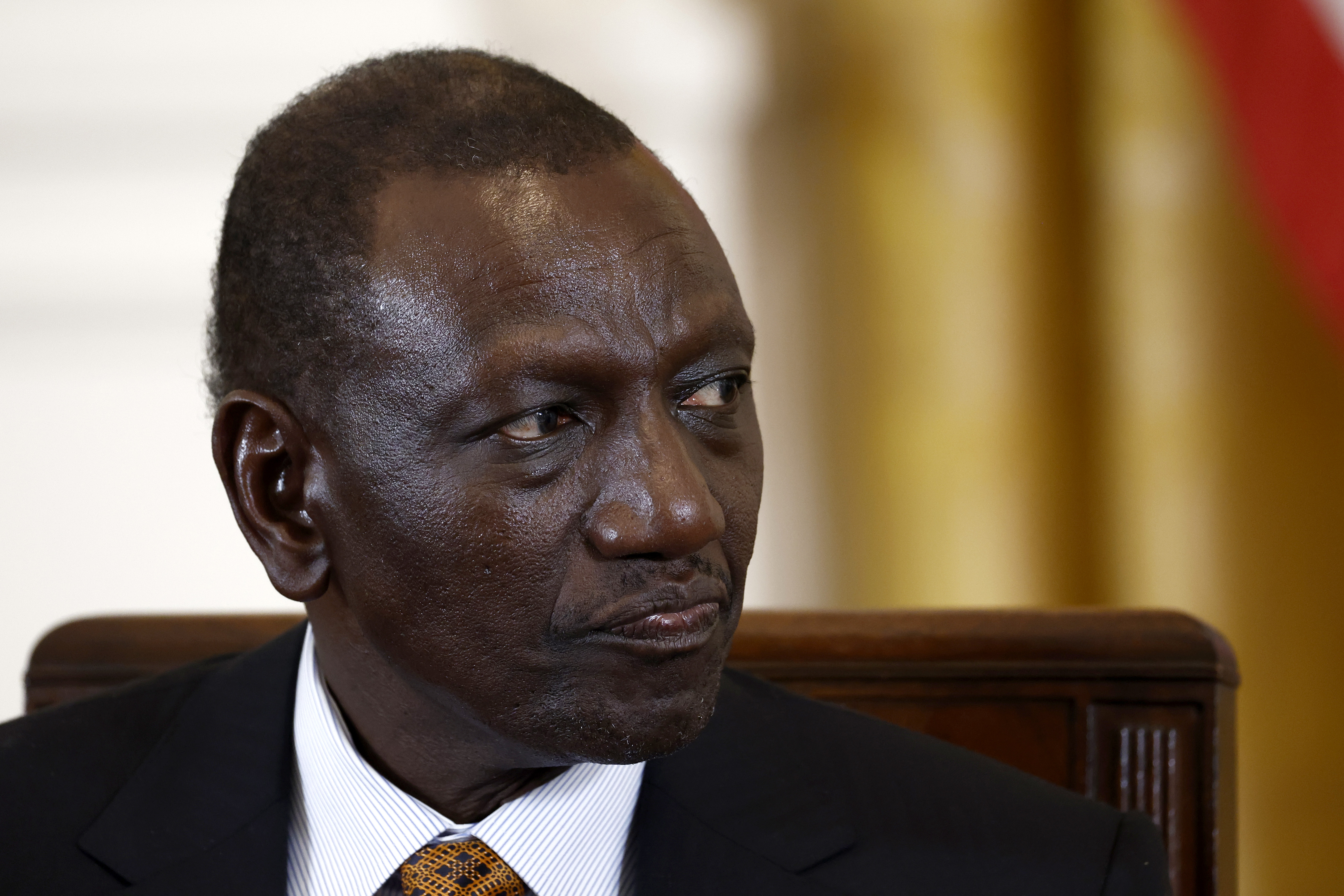
William Kipchirchir Samoei Arap Ruto, born 21 December 1966 in Sambut, Kamagut, Uasin Gishu County, has risen from a local farmer’s son to Kenya’s fifth president, assuming office on 13 September 2022 at the age of 59. Ruto’s political trajectory began in 1997 when he was elected Member of Parliament for Eldoret North on a Kenya African National Union (KANU) ticket, later re‑elected in 2007 under the Orange Democratic Movement (ODM) banner, a tenure that lasted until 2013. His cabinet experience spans several key ministries, including Home Affairs (2002), Agriculture (2008‑2010), and Higher Education (2010), under Presidents Daniel arap Moi and Mwai Kibaki. These roles laid the groundwork for his ascent to the presidency, where he has championed policies aimed at economic diversification, infrastructure development, and social equity. While precise net worth figures remain unverified, Ruto’s influence in Kenyan politics is undeniable, positioning him as a central figure in shaping the nation’s future.
Early Roots and Education
Born on 21 December 1966 in the village of Sambut, Kamagut, Uasin Gishu County, William Ruto entered a modest, agrarian family that was deeply rooted in the local community. The rural setting of Uasin Gishu, known for its expansive farmlands and close‑knit social fabric, provided the backdrop for his early years and instilled in him a practical understanding of the challenges faced by ordinary Kenyans.
Ruto’s formative education took place in the public schools of his native county. He completed his primary studies at a local institution before progressing to secondary school within the same region. The curriculum and teachers there emphasized civic responsibility and community engagement, laying the groundwork for his later interest in public affairs.
During his adolescence, Ruto became involved in neighborhood initiatives that addressed everyday concerns such as water access and school maintenance. These early experiences, coupled with the guidance of local elders who championed collective action, sparked his fascination with governance and laid the foundation for his future political aspirations.
Parliamentary Beginnings and Party Shifts

In 1997, William Ruto entered national politics when he was elected Member of Parliament for Eldoret North on a Kenya African National Union (KANU) ticket. His campaign capitalised on a growing demand for local representation in the Rift Valley, and he secured a decisive victory that positioned him as a rising voice in Kenyan politics. During his first term, Ruto focused on improving infrastructure in his constituency, championing road rehabilitation projects that linked Eldoret North to major trade routes and facilitated market access for local farmers.
A decade later, in 2007, Ruto shifted allegiance to the Orange Democratic Movement (ODM), a move that reflected the broader realignment of Kenya’s political landscape following the 2002 elections. The transition was driven by ideological differences with KANU’s direction and a strategic alignment with ODM’s reformist agenda, which promised greater decentralisation and investment in rural development. Ruto’s decision was also influenced by ODM’s growing popularity in the Rift Valley, offering a platform that resonated with his constituents’ aspirations for economic empowerment.
Throughout his parliamentary tenure, Ruto introduced several key legislative initiatives aimed at bolstering agricultural productivity and education. He sponsored bills that increased subsidies for smallholder farmers and advocated for the expansion of primary schools in underserved areas. These efforts not only strengthened his standing among voters but also laid the groundwork for his later political ascent.
Cabinet Tenure: Home Affairs, Agriculture, Higher Education
During his brief stint as Minister for Home Affairs from August to December 2002, William Ruto focused on strengthening internal security and modernising the police force. He introduced early measures to improve police accountability and advocated for better training programmes, setting the groundwork for subsequent reforms in Kenya’s domestic governance.
| Biography Aspect | Details |
|---|---|
| Full Name | William Kipchirchir Samoei Arap Ruto |
| Date of Birth | 21 December 1966 |
| Age | 59 years |
| Place of Birth | Sambut, Kamagut, Uasin Gishu County, Rift Valley, Kenya |
| Nationality | Kenyan |
| Occupation | Politician, President of Kenya |
| President Since | 13 September 2022 |
| Member of Parliament | Eldoret North (1997–2013) |
| Cabinet Positions | Minister for Home Affairs (Aug–Dec 2002), Minister for Agriculture (Apr 2008–Apr 2010), Minister for Higher Education (Apr–Oct 2010) |
| Political Parties | Kenya African National Union (KANU), Orange Democratic Movement (ODM) |
Ruto’s most consequential cabinet role came as Minister for Agriculture between April 2008 and April 2010. He championed the “Agricultural Transformation Programme,” which aimed to increase smallholder productivity through subsidised inputs, improved irrigation infrastructure, and expanded access to credit. Under his leadership, the ministry launched a nationwide extension service that trained thousands of farmers in sustainable practices, resulting in a measurable rise in crop yields and a notable reduction in post‑harvest losses. His tenure also saw the introduction of a “One-Stop Service Centre” model that streamlined licensing and support services for agribusinesses, fostering a more business‑friendly environment for the sector.
In April 2010, Ruto was appointed Minister for Higher Education for a six‑month period. He spearheaded reforms that broadened access to tertiary education, including the expansion of scholarship programmes for under‑represented communities and the implementation of a “Quality Assurance Framework” to elevate academic standards across universities. His policy initiatives also encouraged public‑private partnerships, leading to increased investment in research and development facilities. These reforms collectively contributed to a more inclusive and competitive higher education landscape in Kenya.
From Deputy to President: 2022 Election and Transition

William Ruto’s ascent to the presidency began with his tenure as Deputy President under Uhuru Kenyatta, where he sharpened his executive experience and built a national profile. In the 2022 campaign, Ruto positioned himself as a reformer, pledging to tackle corruption, boost agricultural productivity, and expand access to quality education. His strategy hinged on a broad coalition that united opposition parties and secured key endorsements from influential regional leaders. The campaign’s messaging emphasized “Harambee for All,” a call for inclusive growth and shared prosperity.
The election concluded with Ruto securing a decisive victory, capturing a majority of the popular vote and winning the electoral college. However, the results were contested by the opposition, leading to a formal election petition filed with the Supreme Court. In a landmark ruling, the court upheld Ruto’s win, affirming the legitimacy of the electoral process and dismissing the petition. On 13 September 2022, Ruto was inaugurated as Kenya’s fifth president, formally assuming office after a solemn ceremony that underscored the peaceful transition of power.
Immediately following his inauguration, Ruto focused on consolidating his administration’s mandate. He convened an emergency cabinet meeting to outline a short‑term agenda, prioritized the appointment of key ministers, and announced the launch of a national reconciliation initiative aimed at bridging political divides. These early actions set the tone for a presidency that sought to balance swift governance with broad-based inclusivity.
Policy Focus: Agriculture, Education, and Economic Growth
Since taking office on 13 September 2022, President Ruto has steered Kenya’s development agenda around three core pillars: agriculture, education, and economic growth. Recognising the sectoral importance of farming to Kenya’s GDP and food security, his administration has prioritised modernising rural production, expanding access to credit, and improving supply‑chain infrastructure. In the realm of learning, the government has sought to broaden enrolment, upgrade school facilities, and align curricula with market needs, aiming to produce a workforce that can drive industrialisation.
Parallel to these sectoral reforms, the presidency has pursued a macro‑economic strategy that encourages investment, boosts private‑sector participation, and stabilises the macro‑environment. This includes targeted fiscal incentives for small‑to‑medium enterprises, the promotion of export‑oriented agriculture, and the expansion of public‑private partnerships for infrastructure projects such as roads, rail, and energy. The administration has also implemented data‑driven monitoring mechanisms to track progress, with early reports indicating gains in crop yields, increased school attendance rates, and a modest uptick in foreign direct investment inflows.
By integrating these policy strands, President Ruto seeks to create a resilient, inclusive economy that leverages Kenya’s human and natural resources. The focus on measurable outcomes and transparent reporting aims to ensure that the benefits of growth are broadly shared across the nation.
Legacy and Controversies
William Ruto’s ascent to the presidency has reshaped Kenyan politics, positioning him as a polarizing yet undeniably influential figure. President Ruto has been credited with consolidating a broad coalition that spans the Rift Valley and urban centers, thereby redefining party alliances and voter expectations. His leadership style—direct and often confrontational—has earned him both staunch supporters who praise his emphasis on “Harambee” principles and critics who argue that his rhetoric deepens regional divides. Public perception remains split, with polls indicating a strong base in the north but growing skepticism in Nairobi and the coastal regions.
The 2022 election remains a focal point of controversy. The 2022 election petition lodged by the opposition alleged irregularities that led to a protracted legal battle. The Supreme Court’s ruling ultimately upheld Ruto’s victory, but the case exposed vulnerabilities in Kenya’s electoral oversight and intensified calls for reform. Ruto’s administration responded by pledging greater transparency and strengthening the Independent Electoral and Boundaries Commission, yet allegations of patronage and corruption persist, fueling ongoing debates about governance and accountability.
Looking ahead, Ruto’s future influence will hinge on his ability to translate political capital into tangible outcomes. While his supporters anticipate continued economic initiatives and infrastructural projects, detractors warn that unresolved controversies could erode legitimacy. His capacity to navigate internal party dynamics, address systemic corruption, and deliver on campaign promises will determine whether his legacy is viewed as transformative or merely turbulent in the annals of Kenyan leadership.