
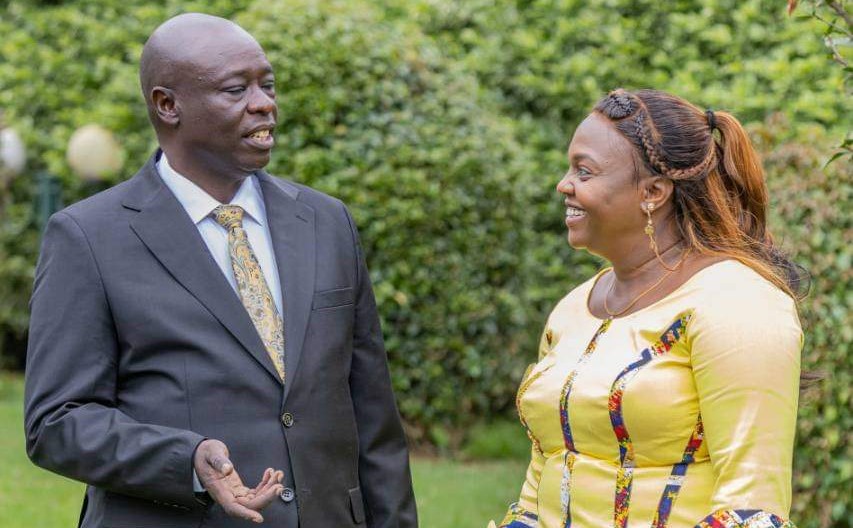
Dorcas Wanjiku Rigathi, now 58, stands as a prominent Kenyan pastor, former Second Lady, and public advocate whose influence spans faith, education, and national service. Born in 1965 in Ndunyu ya Chege, Murang’a County, she rose from the Kiandutu slums of Thika to earn a Bachelor of Education from Kenyatta University, later completing a professional‑management diploma. Her ministry began in 2002 as an usher at Nairobi’s House of Grace, culminating in her ordination as a pastor in 2011. In 1989 she married Rigathi Gachagua, who would become Kenya’s Deputy President, and the couple served as the nation’s Second Lady and First Gentleman during his tenure. A trained teacher, Dorcas has leveraged her academic background to champion educational initiatives, while her role as a public advocate has seen her address social issues ranging from gender equality to community development. Her multifaceted career reflects a commitment to uplifting Kenyan society through faith, education, and civic engagement.
Early Life and Education
Born in 1965 in the rural village of Ndunyu ya Chege in Gatanga, Murang’a County, Dorcas Wanjiku Rigathi’s early years were shaped by the rhythms of a close‑knit community. The modest setting of her birthplace offered a foundation of resilience that would later underpin her public life.
As a child, she moved to the bustling Kiandutu slums of Thika, where she attended Mugumo‑ini Primary School. The school’s modest facilities and dedicated teachers provided a nurturing environment that sparked her intellectual curiosity and love of learning. After primary school, she progressed to Alliance Girls’ High School, a respected institution known for its rigorous academic standards and emphasis on leadership development. Her time there helped refine her critical thinking and communication skills, preparing her for higher education.
Rigathi pursued tertiary studies at Kenyatta University, where she earned a Bachelor of Education (Arts) degree. Her academic journey did not stop there; she later completed a professional‑management diploma, equipping her with a blend of pedagogical knowledge and administrative acumen. These formative educational experiences laid the groundwork for her future endeavors, instilling in her a commitment to excellence and service that would later define her career.
Ministry Beginnings and Ordination

In 2002, Dorcas Rigathi began her ministry journey as an usher at Nairobi’s House of Grace, where her dedication to worship services and pastoral care quickly earned her recognition among congregants and clergy alike. Her role evolved from assisting in liturgical duties to leading small‑group studies and mentoring new volunteers, laying the groundwork for her future pastoral duties.
By 2011, Rigathi was formally ordained as a pastor, a milestone that marked her transition from supportive roles to leading a congregation. As a licensed pastor, she oversees worship planning, sermon preparation, and pastoral counseling, while also spearheading community outreach initiatives that address local
Role as Second Lady and Public Advocacy

Her elevation to Second Lady of the Republic of Kenya followed her husband Rigathi Gachagua’s election as Deputy President, positioning her at the forefront of national public life. In this capacity, she leveraged the visibility of the role to champion causes that resonate across the country’s diverse communities.
| Biography Aspect | Details |
|---|---|
| Full Name | Dorcas Wanjiku Rigathi |
| Date of Birth | 1965 |
| Place of Birth | Ndunyu ya Chege, Gatanga, Murang’a County, Kenya |
| Nationality | Kenyan |
| Occupation | Pastor, public advocate, former Second Lady of Kenya |
| Spouse | Rigathi Gachagua |
| Children | Two sons |
| Education | Mugumo‑ini Primary School; |
A central pillar of her advocacy has been women’s empowerment, where she has launched initiatives that provide vocational training, mentorship, and access to micro‑finance for women in both urban and rural settings. She has also been a vocal proponent of education, partnering with ministries and NGOs to improve school infrastructure, promote girls’ enrollment, and advocate for inclusive curricula that address gender disparities. In the realm of health, her campaigns focus on maternal and child wellness, HIV/AIDS awareness, and the expansion of community health services, particularly in underserved regions.
Her public engagements—ranging from keynote addresses at national conferences to town‑hall meetings with grassroots leaders—have amplified these priorities. Through persuasive speeches and strategic collaborations, she has influenced policy discussions at the highest levels, urging the government to adopt legislation that supports women’s rights, educational reform, and public health initiatives. Her role as Second Lady has thus become a catalyst for tangible social change, embedding her advocacy into Kenya’s policy framework.
Family and Personal Life

She married Rigathi Gachagua in 1989, forming a partnership that has endured through decades of public service and personal growth. Their union is characterized by mutual respect and a shared vision, allowing both to pursue ambitious goals while maintaining a grounded family life. The stability of their marriage has provided a solid foundation for her extensive commitments across community and national platforms, and it has also offered a platform for collaborative initiatives, enabling her to balance pastoral responsibilities with civic engagement.
Together, they raise two sons, who are central to her daily routine and serve as a continual source of
Legacy, Impact, and Current Ministry
Dorcas Rigathi’s ministry has reshaped Kenyan religious discourse by intertwining faith with tangible social change. As a pastor and public advocate, she has championed education and health initiatives that reach beyond church walls, influencing policy debates at the national level. Her tenure as Second Lady of the Republic amplified her platform, allowing her to embed women’s empowerment into mainstream conversations and inspire a generation of faith‑based leaders. Her initiatives, such as the “Grace for All” literacy campaign, have been adopted by local governments.
Today, she continues to shepherd her congregation at House of Grace while spearheading community outreach programs that address poverty, literacy, and maternal health. Future aspirations include expanding her pastoral network across East Africa and establishing a scholarship fund for women pursuing theological studies. She also mentors young pastors through a structured fellowship program that emphasizes ethical leadership. Her vision is to create a sustainable pipeline of female clergy who can navigate both spiritual and societal challenges.
Recognition for her work has come in the form of national awards for community service and invitations to speak at international faith conferences. Her legacy is evident in the growing number of women who cite her as a role model, demonstrating that leadership rooted in compassion can drive lasting societal transformation.